Water softeners in Mukwonago, WI
Water softeners for Mukwonago's blended well water
Mukwonago pulls its water from two very different depths: two village wells go down 1,500 feet, three reach only 105 to 180, and the utility blends them. When the Wisconsin DNR sampled both entry points in June 2026, the water read 390 and 370 milligrams per liter, about 23 and 22 grains per gallon. One phone call puts a price on softening that blend for the whole house.
Call (262) 829-5961Mon to Fri, 7am to 5pm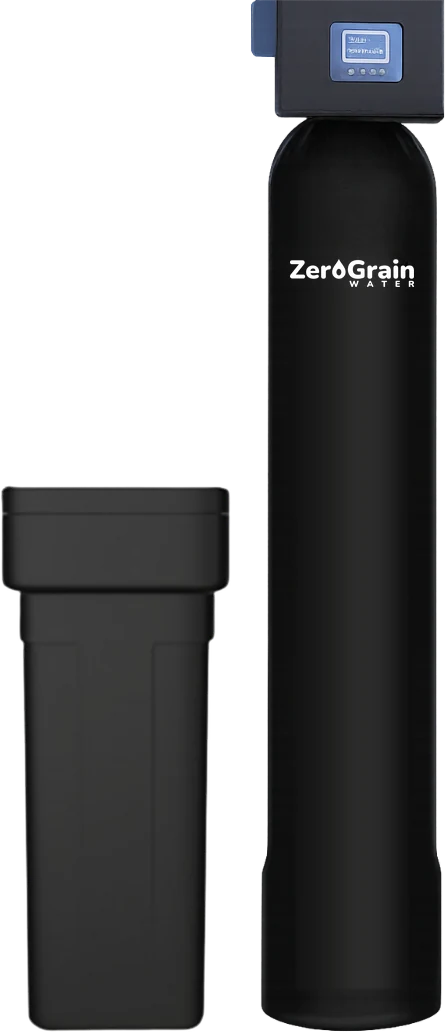
What is included
- Whole-house softener and its matching brine tank
- Separate drinking-water faucet beside the kitchen sink, reverse osmosis behind it, included
- Plumbing work by a contractor who holds a Wisconsin plumbing license
- Hardness read before the work, and read again at a faucet until it comes back zero
- A single figure for the whole job, quoted over the phone
- Nobody shows up afterward with a sales pitch
- Quote phones staffed weekdays, 7am to 5pm
Mukwonago water hardness
Source: Wisconsin DNR compliance sampling, Mukwonago waterworks; Village of Mukwonago 2024 Consumer Confidence Report
Get your price
Send your details and we will call you with one price. Nobody comes to the house to sell you anything.
Mukwonago's water report skips hardness
Page through the village's annual water reports and you will not find a hardness number. The figures here come from the Wisconsin DNR, which pulled compliance samples at the village's two entry points on June 16 and 17, 2026.
One entry point came back at 390 milligrams per liter and the other at 370. Run through the 17.1 conversion, those are about 23 and 22 grains per gallon, better than twice the 10.5 grains where the USGS scale starts using the words very hard.
Deep wells, shallow wells, one blend
Two of the village wells reach 1,500 feet and date from 1966 and 1981. The other three are shallow, 105 to 180 feet, and the utility mixes the two kinds of water on purpose.
Water from those depths carries different chemistry, yet both entry points still came in at 22 to 23 grains. The blend leaves Mukwonago nowhere near soft water, and what comes out of your own faucet is what the sizing should follow.
The iron plant at Well 5
In 2019 the village built an iron filtration plant at Well 5, because that well's water ran high in iron. On village water, that plant is the utility's equipment and the utility's responsibility.
Off the village system, nothing like it sits between a private well and the kitchen faucet. If you are on your own well and a lab report shows iron, bring that up on the call.
Village, Town of Mukwonago, Vernon
The village counts 8,767 people in the state's 2026 estimate. The Town of Mukwonago adds 7,740 and Vernon 7,459, and a lot of those homes are served by private wells rather than village mains.
The June 2026 DNR samples speak only for village water. A well in the town or in Vernon has a number of its own, and the wells page explains what to have ready.
From one phone call to a zero at the faucet
The call starts with your address, or the word well. Then how many people share the house, where the supply pipe comes through, and where the old softener stands, if there is one; well owners can read off any lab results. From those answers comes the sizing and a single figure for the whole job.
If you say go, a plumbing contractor licensed by Wisconsin unhooks any old unit, stands the new softener and its salt tank at the supply pipe, plumbs the bypass, runs the drain hose to an air gap, and finishes at the kitchen sink with the drinking-water faucet. A hardness reading comes first, and the last one, taken at a faucet once the softener runs, has to come back zero.
The resin, the brine and the salt
What makes Mukwonago's water hard is calcium and magnesium, brought up by the village wells, about 22 to 23 grains of it per gallon at the entry points.
A softener holds a bed of resin that swaps those minerals for sodium as the water runs through, or for potassium when the salt tank is filled with potassium chloride. Once the resin has done all the swapping it can, the softener regenerates: brine from the salt tank washes through and recharges it, and the rinse goes out the drain hose to its air gap.
So besides the supply pipe, a softener wants two things close by: a drain to take that rinse, and floor space beside it for the salt tank and the bags that refill it.
Two entry points, about one grain apart
An entry point is where water from the village wells goes into the pipes that run to homes. Mukwonago has two, and the DNR's June 2026 compliance samples came from both: 390 milligrams per liter at one, 370 at the other.
Twenty milligrams per liter is a little over one grain, so the two entry points sit close together. The published samples do not tie either one to a street, which is one more reason the plumber reads your own faucet before anything is hooked up.
Common questions
Why is there no hardness number in Mukwonago's water report?
The village's annual reports simply don't print one. The usable figures come from Wisconsin DNR compliance sampling, which in June 2026 found 390 and 370 milligrams per liter at the two entry points.
Does mixing deep and shallow wells make the water softer?
The mix is still very hard. Both entry points tested at about 22 to 23 grains in June 2026, more than double the USGS cutoff of 10.5.
Should the iron plant at Well 5 concern me?
It is utility equipment, built in 2019 for high iron in that one well. On village water, iron at the well is the utility's side of things. A private well has no such plant upstream, so bring any iron result to the call.
Is the Town of Mukwonago or Vernon in your area?
Both are, along with the village itself. Homes out there are often on private wells, so open the call by saying whether a village water bill comes to your house.
Why does a licensed plumber have to do the installation?
Because state plumbing law reaches the softener's drain: the line runs to a house drain through an air gap, and Wis. Stat. ch. 145 treats that joint as plumbing. That work goes to a licensed contractor, and we keep to choosing the size, providing the equipment and booking the date.
Is the RO faucet available without the softener?
No. The reverse-osmosis faucet is part of the whole-home package and is not offered by itself.
Can I look up the DNR's Mukwonago samples myself?
Yes. The Wisconsin DNR's public drinking water portal has a page for the Mukwonago waterworks, and the compliance samples from June 16 and 17, 2026 list hardness at both entry points.